Brake caliper – location
The caliper of a disc brake is most commonly positioned ahead of or behind the wheel axis. Its position has no direct effect on the amount of braking torque generated. Brake caliper positioning is primarily determined by axle design, powertrain layout, brake cooling requirements and vehicle weight distribution. Particularly in supercars, designers may aim to position the brake calipers as close as possible to the centre of the vehicle.
When looking at the wheels of different cars, you may notice that their brake calipers are positioned differently. Some manufacturers place them ahead of the wheel axis, while others position them behind it. What determines their position?
In terms of the operating principle of a disc brake, both solutions are equivalent. In other words, with otherwise identical brake parameters, the position of the caliper alone has no effect on the amount of braking torque generated. However, its exact position is determined by several design factors:
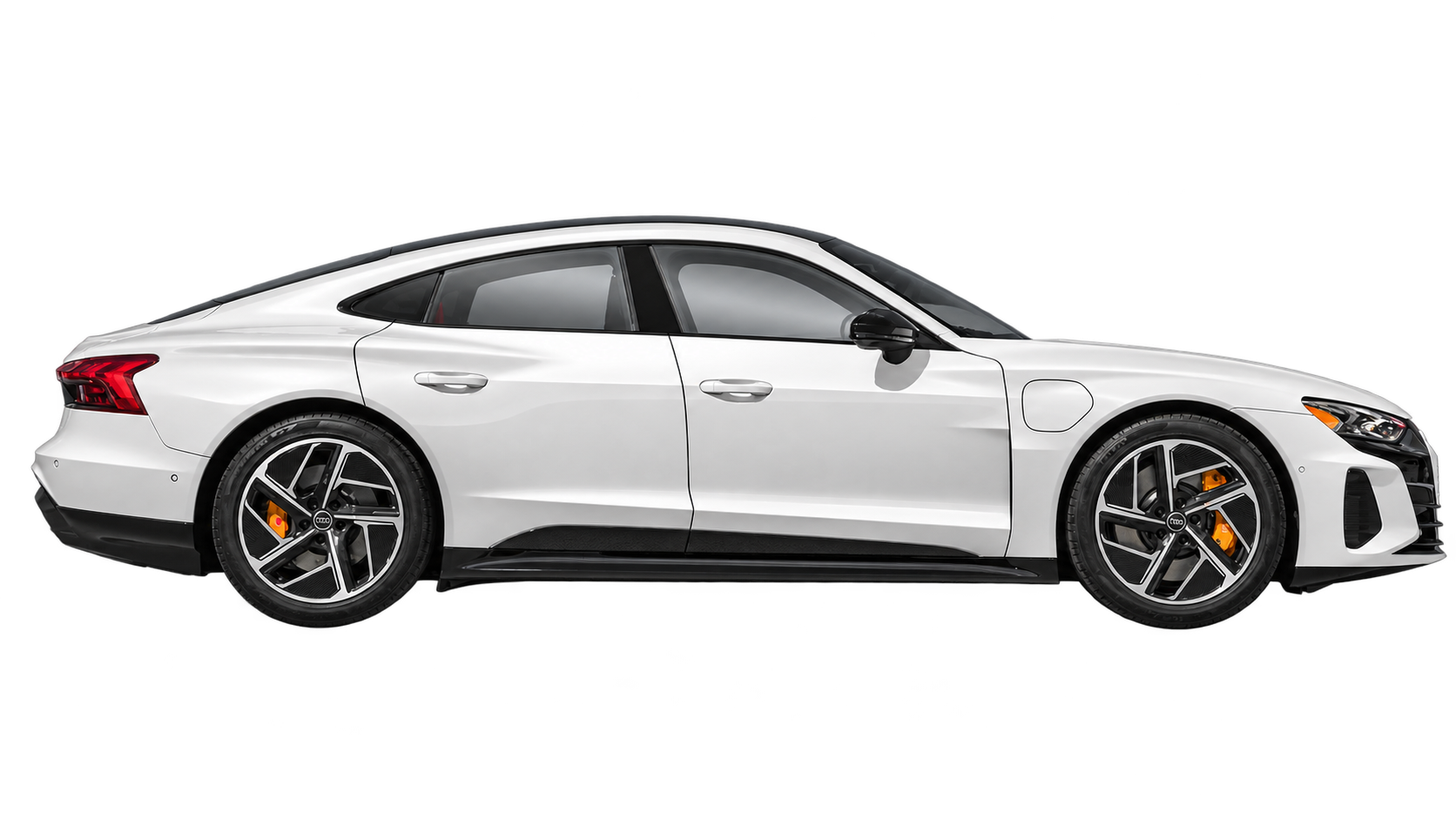
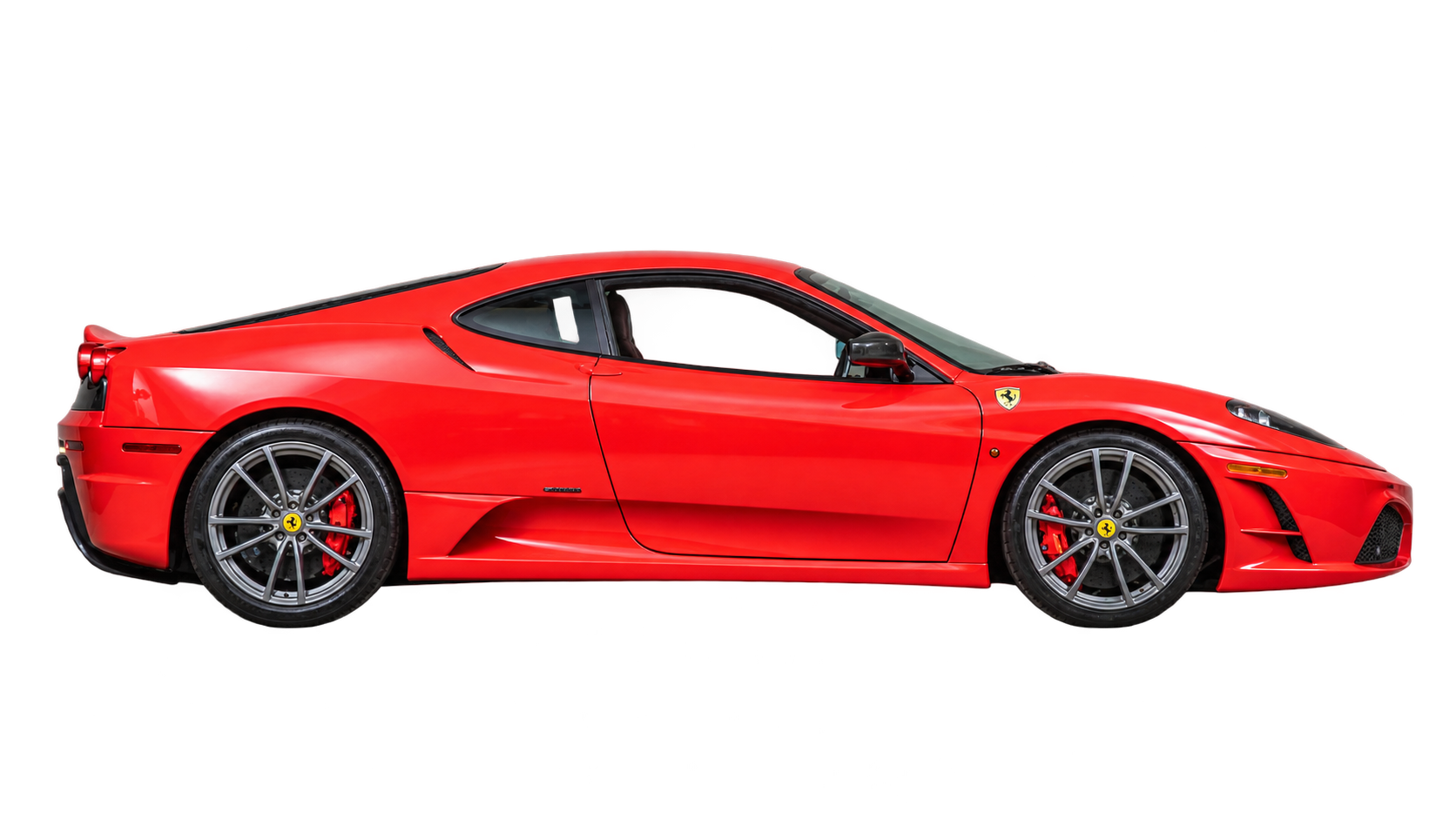
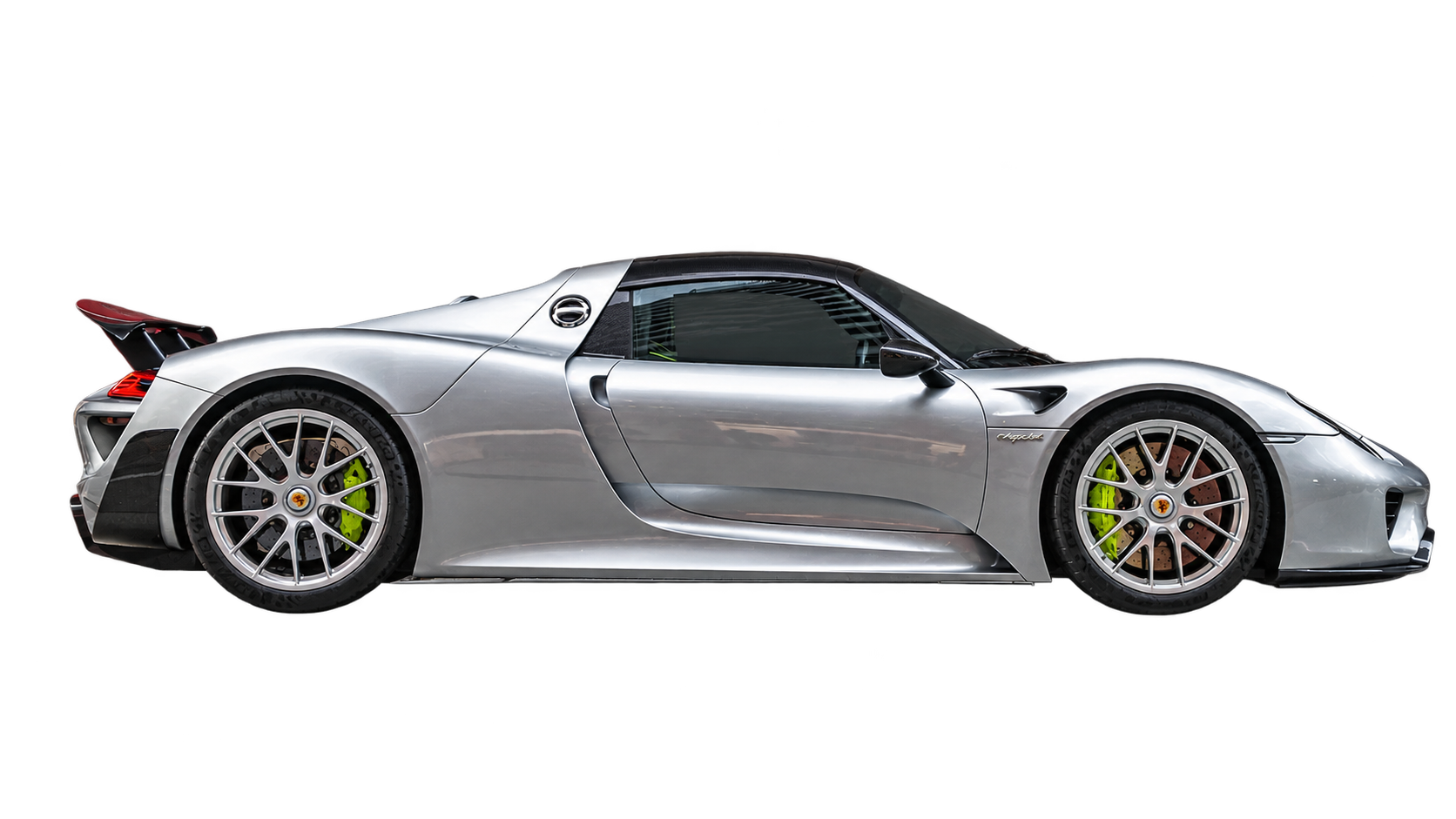
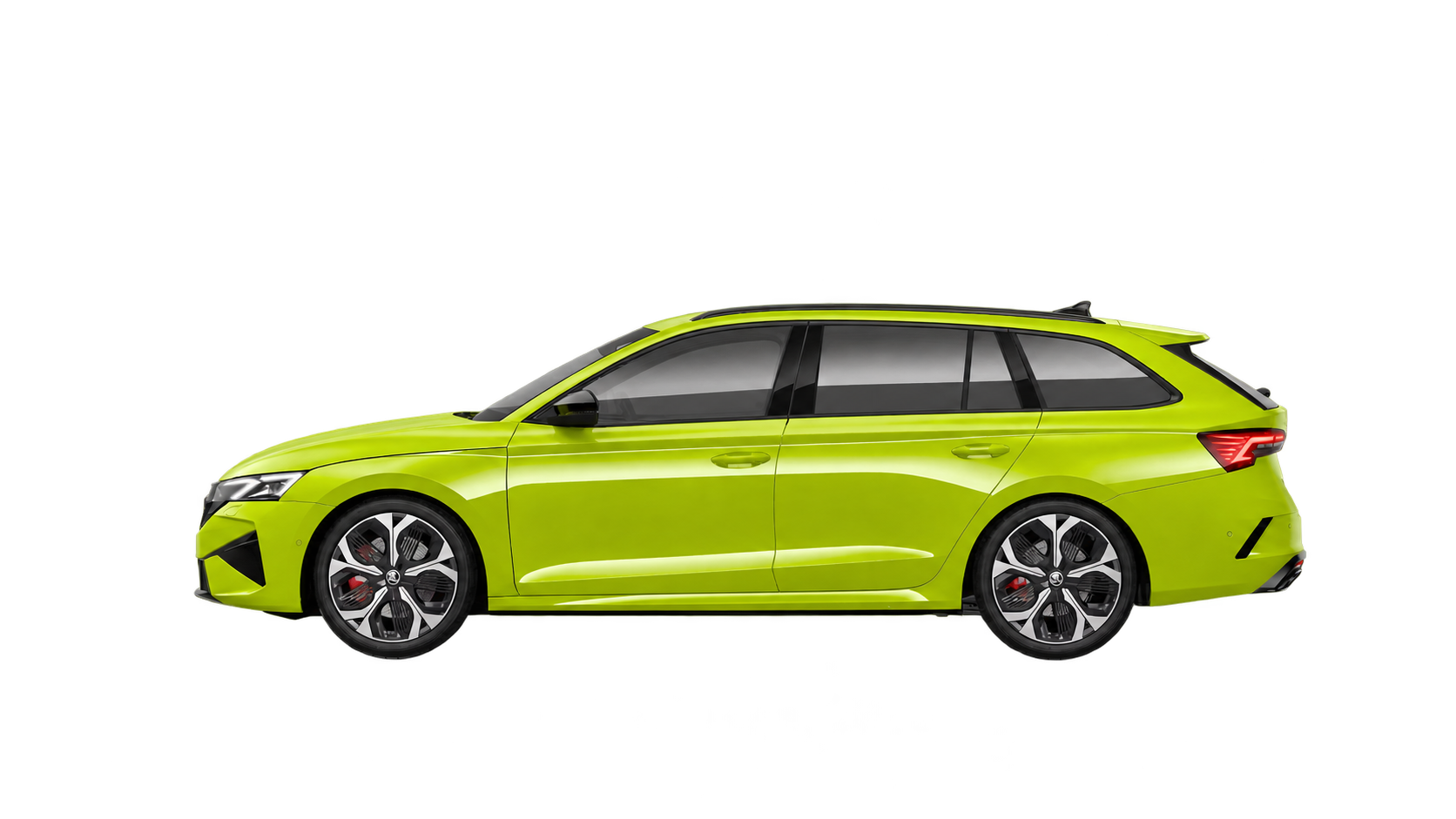
1. Suspension and steering design
The most important factor is the spatial arrangement of the individual axle components, particularly the steering knuckle, suspension arms, shock absorber and steering mechanism. Simply put, the brake caliper must not interfere with other components, even at full steering lock or throughout the suspension travel.
On the front axle, which is typically steered, the position of the brake caliper is often related to the location of the steering tie rod. Due to packaging constraints, the caliper is therefore often mounted on the opposite side of the steering knuckle from the tie rod attachment point.

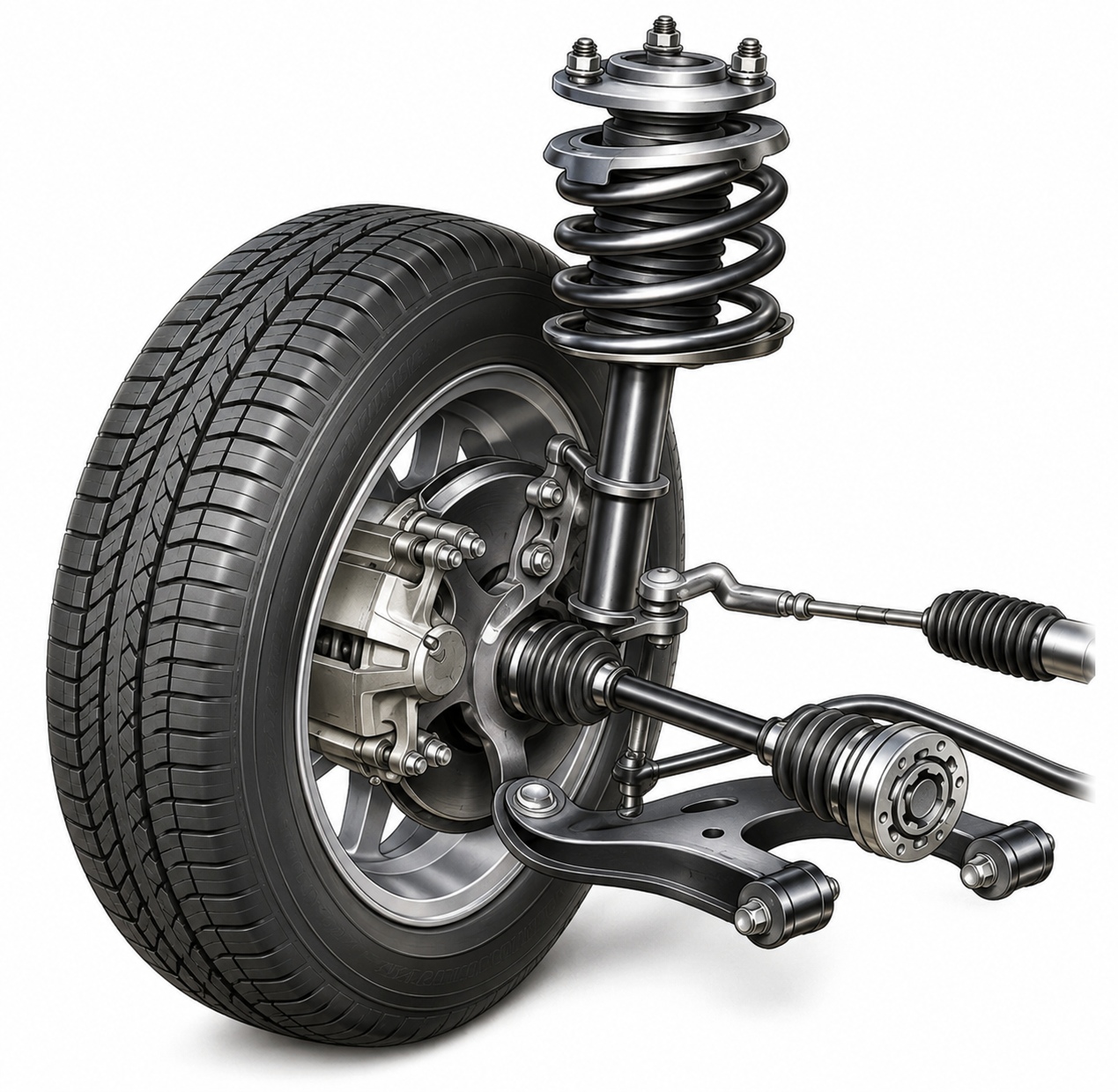
On the rear axle of most cars, there is no need to accommodate a steering mechanism. The position of the brake caliper is therefore primarily determined by the arrangement of the suspension arms, the position of the spring and shock absorber, and the design of the parking brake.
2. Weight distribution
In sports cars and racing cars, brake calipers are often positioned towards the centre of the vehicle, behind the wheel axis on the front axle and ahead of it on the rear axle.
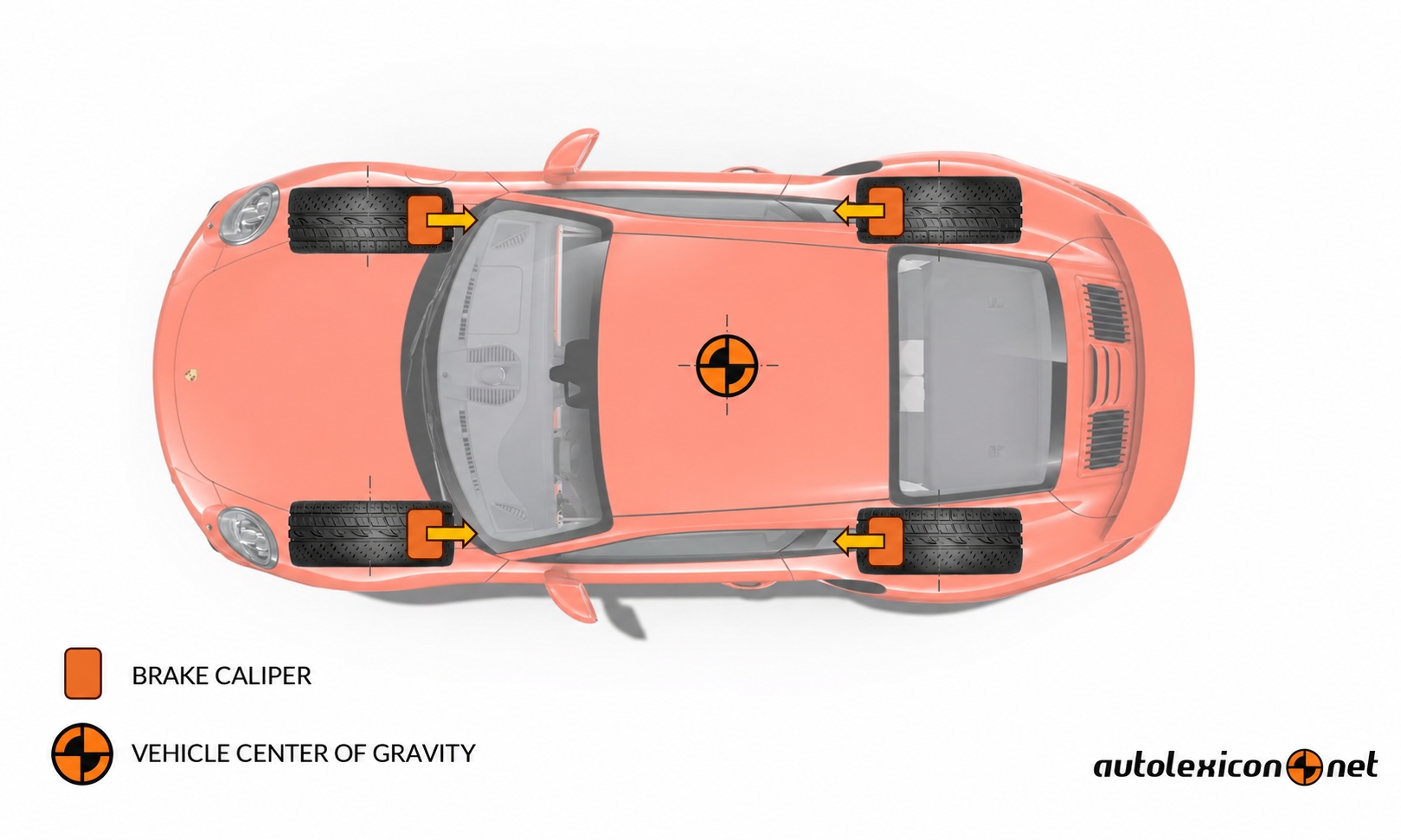
Concentrating mass closer to the vertical axis passing through the vehicle’s centre of gravity reduces the moment of inertia about that axis. The vehicle therefore responds more readily to changes in direction, which is particularly desirable in sports cars and racing cars. However, the effect of brake caliper positioning alone is relatively small.
3. Brake cooling
The position of the brake caliper affects airflow around the brake disc and throughout the wheel. This factor is particularly important in high-performance sports cars and racing cars, whose braking systems are subjected to high thermal loads.
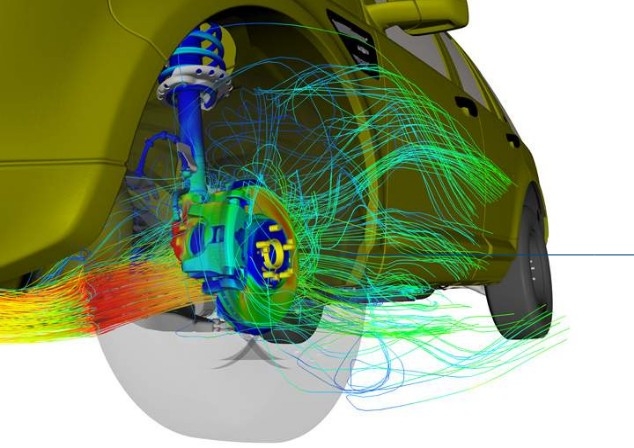


However, it is not possible to generalise which brake caliper position provides better cooling. This depends primarily on the design of the cooling air supply, the shape of the wheel arch and the design of the wheel rim.
4. Maintenance and operating conditions
When designing an axle, engineers must also consider brake caliper accessibility during brake pad replacement, as well as the routing of brake hoses and any electrical wiring.
When mounted in the lower part of the wheel, the brake caliper may be more exposed to water, dirt and mechanical damage.
Another important design requirement is the ability to bleed the braking system easily. The bleed screw must be located at the highest point of the relevant hydraulic cavity within the caliper to prevent air bubbles from becoming trapped.
Did you know?
Does brake caliper position affect braking performance?
With otherwise identical brake parameters, the position of the caliper has no direct effect on the amount of braking torque generated. The determining factors are the brake pad clamping force, the coefficient of friction and the effective radius of the brake disc.
While brake caliper positioning in conventional cars is primarily determined by axle design, in sports cars and racing cars it may also form part of vehicle dynamics optimisation.