OTA (Over-the-Air)
The abbreviation OTA is used in connection with wireless software updates in today’s modern cars.
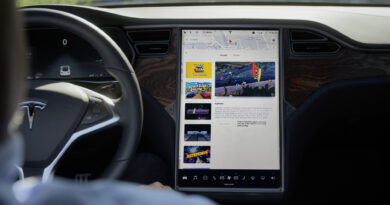
The term OTA, from English (Over-The-Air), refers to a technology that allows remote distribution of software, firmware, and calibration data to electronic control units of modern vehicles. Updates are delivered via mobile data connection or Wi-Fi, so a physical visit to the service center is not required. This allows the car to function similarly to a smartphone – regularly gaining new features, fixing bugs, and improving safety.

Wireless software updates (OTA) fundamentally change the way a car ages. With continuous updates, a vehicle can even improve over time, gaining new features and responding to security threats much like modern electronic devices. At the same time, this technology imposes high demands on long-term software support, which becomes an essential condition for the operation of modern vehicles.
How OTA Works:
Software updates are delivered to the vehicle automatically via the mobile data network, so there is no need to visit a service center. Powerful central vehicle computers handle their proper download and installation. The entire process takes place in three main steps:
1/ Downloading the update package
The software is downloaded to temporary storage in the vehicle, usually via the mobile data network. Downloading can occur even while driving, as it does not affect the car’s functionality.
2/ Integrity and authenticity verification
The downloaded package is protected with cryptographic signatures. The vehicle checks its completeness, authenticity, and compatibility – ensuring it has not been altered and is safe to install.
3/ Installing the update
The installation itself occurs only when the car is stationary. The electronic control units switch to service mode and load the new software version. If the installation fails, the system allows a return to the previous functional version (rollback).

Benefits of OTA:
- fewer service visits – bugs and optimizations can be resolved remotely
- longer vehicle lifecycle – the car can gain features that did not exist at the time of manufacture
- improved safety – quick response to detected threats and software errors
- continuous modernization – the vehicle remains up-to-date throughout its lifetime
- equipment flexibility – the option to activate or purchase functions and services afterward
Disadvantages / Risks of OTA:
- reliance on connectivity – without a stable mobile signal, updates may fail or be interrupted
- possible changes in system behavior – after an update, assistants or functions may behave differently than the user is accustomed to
- temporary unavailability of the vehicle – the car may be briefly blocked during installation
- security risks – requires robust encryption, authentication, and data integrity checks
- higher technical complexity – the centralized architecture must be designed so that an update failure does not limit vehicle functionality
OTA Update Security:
OTA security in the automotive industry is governed by ISO/SAE 21434 and UNECE R155 (Cybersecurity Management) and R156 (Software Update Management) standards, which define requirements for cyber protection and software update management.