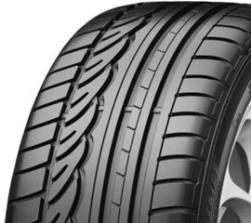
Tire Construction (Tyre Construction)
A tire plays a crucial role in transmitting forces between a vehicle and the road surface. Tire construction affects not only driving characteristics and ride comfort, but also overall driving safety.
Every tire consists of three main components: rubber (80–85%), various fibers (12–15%), and steel cord (2–3%). A modern tire is essentially a reinforced rubber composite, whose basic structure can be seen in the illustration below. Tires for passenger cars and trucks consist of four main parts: crown, shoulder, sidewall, and bead.

1 – crown belt layer; 2 – tread; 3 – radial carcass ply; 4 – sidewall; 5 – inner rubber layer; 6 – bead; 7 – bead wire
Tire construction
The basic raw materials used in tire manufacturing are elastomers (natural or synthetic rubber), rubber compound additives, cords made from natural and synthetic fibers, steel cords, and, last but not least, steel bead wire.
1 – Crown belt layer (belt)
The belt forms a transition between the tread and the tire carcass. Its purpose is to stabilize the tread in the circumferential direction and increase the tire’s resistance to punctures. Truck tires use an average of three to four belt layers, while passenger car tires usually have two. Today, radial tires are equipped almost exclusively with steel-cord belts (steel-belted tires).

2 – Tread
The tread is a very important part of the tire, featuring a tread pattern. It provides contact between the tire and the road surface, and its thickness affects tire heating. To reduce energy losses and wear, it should be as thin as possible. However, this does not apply to truck tires, whose tread is usually designed to allow additional regrooving of the tread pattern.

3 – Radial cord ply (tire carcass)
The carcass is the basic structural part of the tire and consists of cord plies. The arrangement and composition of these plies determine the tire’s fundamental properties. During the development of tires, both the arrangement of the fibers and the materials used have changed. Construction has evolved from crossed woven fabrics in the distant past to the parallel arrangement of nonwoven cord fibers used today. According to the composition of the cord layer, tires are classified as radial or bias-ply (diagonal).

4 – Sidewall
The sidewall protects the tire carcass from external influences. It is made from a special flexible rubber compound that must withstand repeated bending, aging, and cracking.

5 – Inner rubber layer
The inner rubber layer prevents air from escaping from inside the tire. In tubeless tires, it performs the function of an inner tube. It is made from butyl rubber.

6 – Bead
The bead is the reinforced part of the tire that rests against the rim. The bead core consists of high-strength steel wire. The bead anchors the cord plies and ensures that the tire is securely seated on the rim.

7 – Bead wire
The bead wire ensures that the tire fits properly onto the rim. It also ensures an airtight seal between the tire and the rim and the transfer of longitudinal forces (through friction between the rim and the tire bead).

Video
History
The American discoverer of natural rubber vulcanization, Charles Goodyear, was born on December 29, 1800, in Connecticut. Charles Goodyear conducted experiments by adding various substances to rubber, unfortunately without much success. The properties of products made from raw rubber were unsatisfactory, so Charles Goodyear began coloring them so that they would at least not look like rubber. One day, he decided to remove the coating with nitric acid and discovered that the shoes had turned black. He therefore put them aside. After several days, however, he found that they had become smooth and non-sticky. Later, he met Nathaniel Hayward, from whom he purchased a patent for strengthening rubber by adding sulfur. But even this solution did not achieve the desired result. It was not until 1839 that a revolutionary discovery was made, reportedly by accident, when Goodyear dropped a piece of rubber processed according to the purchased patent onto a hot stove plate. While scraping it off, Goodyear noticed that part of the rubber had become elastic and hard. After a series of further experiments, he obtained a patent for the vulcanization of natural rubber in 1844. Goodyear, however, was not a good businessman. Although Goodyear became a founder of the rubber industry, he left his descendants a debt of $200,000 after his death.
Tomáš Baťa was responsible for producing the first Czech tire at the Tomáš Baťa factories in Zlín in 1932. The first Baťa tires were fitted for a journey from Zlín to Luhačovice. After the war, in 1948, the three largest tire manufacturers united under a single brand – Barum. The name was formed from the initial letters of the company names Baťa, Rubena, and Matador. In 1972, a newly built tire factory covering an area of 13 hectares was opened in Otrokovice.